
How Often Should You Ceramic Coat Your Car? A Complete Guide
Investing in paint protection keeps your vehicle looking glossy while shielding the clear coat from environmental hazards. When car owners explore professional protection options, one practical question always arises: how often should you ceramic coat your car to maintain peak gloss and hydrophobic performance?
The short answer is that a professional ceramic coating typically lasts between two and five years, while entry-level consumer sprays usually require reapplication every six to twelve months. Knowing the right frequency depends heavily on product grade, driving habits, climate exposure, and how well you maintain the vehicle.
Let’s break down the science behind ceramic coatings, how long different types last, and how you can maximize your investment.
Quick Reference: Coating Lifespan and Reapplication Frequency
| Coating Type | Typical Lifespan | Recommended Reapplication | Best For |
| Consumer Spray Sealant | 3 to 6 months | Every 3 to 4 months | DIY quick maintenance |
| Entry-Level Liquid Ceramic | 1 to 2 years | Every 12 to 18 months | Budget-conscious garage vehicles |
| Professional Grade (Multi-Year) | 3 to 5 years | Every 3 to 5 years | Daily drivers seeking high durability |
| Self-Healing / Elite Ceramic | 5 to 7+ years | Every 5 to 7 years | Luxury, performance, and fleet cars |
What Exactly Is a Ceramic Coating?
A ceramic coating is a liquid polymer composed primarily of silicon dioxide (SiO2) or silicon carbide (SiC). When applied to a vehicle’s exterior, the chemical formula bonds directly with the factory clear coat on a microscopic level.
Unlike traditional carnauba waxes that sit loosely on top of the paint surface and melt under high temperatures, ceramic coatings create a semi-permanent sacrificial barrier. This nano-ceramic layer fills in microscopic pores across your vehicle’s paintwork, delivering several key benefits:
- High Hydrophobic Properties: Water, road grime, and mud bead up and slide off effortlessly.
- UV Ray and Oxidation Defense: Protects clear coat pigment from fading caused by relentless sun exposure.
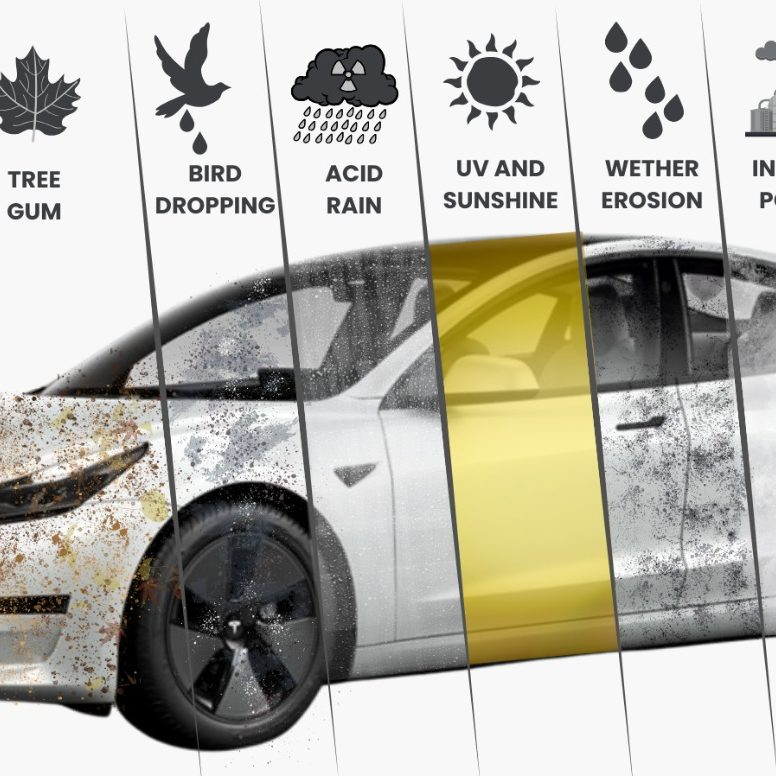
- Chemical Resistance: Guards against acidic contaminants such as bird droppings, bug splatter, and tree sap.
- Enhanced Visual Depth: Adds intense gloss, reflection, and clarity to the paint surface.
If you are exploring comprehensive exterior protection, checking out the dedicated options at Slim’s Detailing Studio can give you a better idea of how professional multi-layer formulas compare to standard retail kits.
How Often Should You Ceramic Coat Your Car? (By Product Category)
When determining your reapplication schedule, product classification is the single biggest factor. Not all ceramic formulas are created equal.
1. Spray-On Ceramic Boosters (3 to 6 Months)
Spray-based SiO2 formulas serve as convenient maintenance top-ups or short-term sealants. They are easy to apply at home after a wash, but their low concentration of active ceramic solids means they break down quickly under weather stress. Plan on reapplying these quarterly.
2. Consumer-Grade DIY Liquid Bottles (1 to 2 Years)
Over-the-counter ceramic kits sold in small glass dropper bottles offer higher SiO2 percentages than spray bottles. They provide solid hydrophobic action for roughly twelve to eighteen months. However, DIY formulas are engineered to be forgiving during application, which makes their chemical bond less durable than commercial coatings.
3. Professional-Grade Ceramic Coatings (3 to 5 Years)
Professional coatings require careful paint correction, decontamination, and controlled indoor curing conditions. These formulas cure into a significantly harder shell that resists harsh road salts, detergent washes, and heat cycles. If you ask a detailing technician how often should you ceramic coat your car using professional-grade formulas, the general standard is every three to five years.
4. High-End Multi-Layer and Self-Healing Coatings (5 to 7+ Years)
Advanced commercial formulations use high-solids ceramic technology or hybrid self-healing polymers that activate with heat to eliminate minor swirl marks. With proper annual inspections and decontamination washes, these systems can easily last past five years before requiring a full strip and reapplication.
Factors That Impact Ceramic Coating Longevity
Two identical cars coated with the exact same product can experience completely different lifespans. Environmental conditions and routine care directly determine how long the coating holds up.
Storage and Daily Exposure
A vehicle parked inside a climate-controlled garage will easily reach the maximum rated lifespan of its coating. In contrast, a daily commuter parked outside beneath trees or near industrial zones faces constant UV degradation, fallout, and acid exposure that degrades the top sacrificial layer faster.
Local Climate and Road Conditions
Extreme temperature swings, heavy winter road salt, coastal sea air, and high humidity accelerate coating wear. Road brine is especially corrosive; vehicles driven through harsh winter slush need frequent touchless rinsing to stop salt deposits from clogging the coating’s hydrophobics.
Car Washing Technique
Automated tunnel car washes with spinning abrasive brushes are the fastest way to ruin a ceramic coating. The stiff nylon bristles act like coarse sandpaper, scouring micro-scratches into the coating and clear coat. Safe two-bucket hand washing or touchless washes preserve the nano-layer far longer.
Signs It Is Time to Reapply Your Ceramic Coating
You do not have to guess when your vehicle’s protection is wearing thin. Look for these clear physical indicators:
- Loss of Water Beading: Water begins to pool or sheet flatly across the panels rather than forming tight, round beads that roll off when driving.
- Reduced Slickness: The paint feels grabby or rough to the touch after a wash, indicating the smooth SiO2 layer has eroded.
- Diminished Gloss and Reflection: The clear coat loses its mirror-like finish and begins looking dull.
- Stubborn Contaminant Adhesion: Bug guts, brake dust, and road grime become difficult to remove during routine washes.
Ceramic Coating vs. Wax and Paint Protection Film (PPF)
Car owners often weigh ceramic coatings against other common paint protection options. Here is how they compare across core performance categories:
| Feature | Carnauba Wax | Ceramic Coating | Paint Protection Film (PPF) |
| Durability | 1 to 3 months | 2 to 5+ years | 7 to 10 years |
| Rock Chip Defense | None | Minimal (scratch resistance only) | High (absorbs direct impact) |
| Hydrophobic Action | Moderate | Extreme | Moderate to High |
| Self-Cleaning Ease | Low | High | High |
| Installation Effort | Low (DIY friendly) | High (requires paint prep) | Professional installation only |
While ceramic coatings provide exceptional gloss and chemical resistance, they do not stop high-velocity rock chips. Many car enthusiasts install Paint Protection Film on high-impact areas like the front bumper and hood, then apply ceramic coating over the entire vehicle for combined protection.

How to Maintain Your Ceramic Coating for Maximum Lifespan
Proper maintenance helps you get every month of performance out of your coating. Follow these essential care guidelines:
- Observe the Curing Window: Keep the car completely dry for the first 24 to 48 hours after application, and avoid washing with soaps for at least one full week while the formula fully cross-links.
- Wash Every Two Weeks: Use a pH-neutral automotive shampoo free of added waxes or silicone gloss enhancers.
- Use the Two-Bucket Method: Keep one bucket for soapy water and a second bucket with clean rinse water to trap dirt particles away from your wash mitt.
- Dry with Dedicated Microfiber: Use clean, plush microfiber drying towels or a filtered leaf blower to avoid marring the finish.
- Apply an SiO2 Booster Twice a Year: Adding a ceramic detail spray after a wash refreshes the top hydrophobic layer and restores slickness.
For a deeper understanding of standard surface safety and environmental impact guidelines regarding vehicle cleaning chemicals, reviewing standards from the U.S. Environmental Protection Agency provides helpful context on responsible automotive care products.
Final Thoughts
Knowing how often should you ceramic coat your car comes down to balancing your budget, driving demands, and expectations. While spray coatings require quarterly attention, a professionally installed ceramic system gives you years of deep gloss, UV protection, and simple wash days without constant rewaxing.
If you want your vehicle to stay protected against harsh elements year-round, exploring professional application options at Slim’s Detailing Studio is the best way to secure lasting results.